
How Do I Build Efficient Systems in a Small Law Firm?
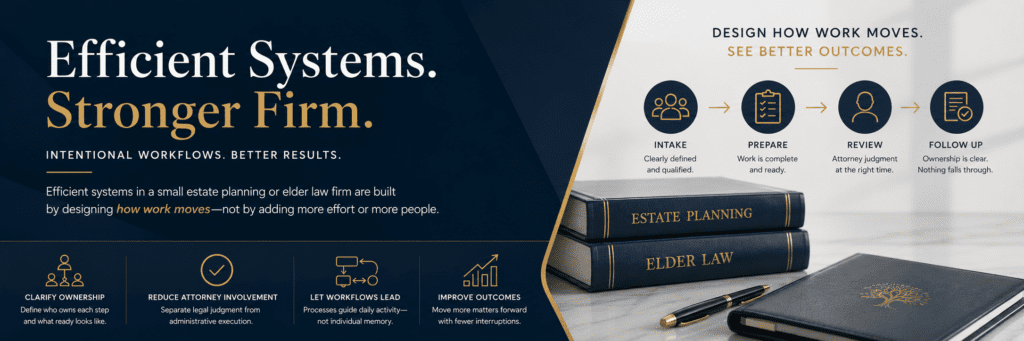
Efficient systems in a small estate planning or elder law firm are built by designing how work moves—not by adding more effort or more people. Firms stabilize operations when they clarify ownership, reduce attorney involvement in non‑legal tasks, and let workflows guide daily activity instead of individual memory.
Why Small Law Firms Feel Busy but Unstable
Many estate planning and elder law firms reach a stage where everyone is working hard, yet progress feels uneven. Files stall. Attorneys stay deeply involved. Hiring feels tempting—but relief is short‑lived. This pattern is rarely about commitment or competence. It’s about workflow design. When processes evolve informally, effort increases without improving throughput or profitability.
Workflow vs. Hiring: A Critical Distinction
Hiring adds capacity. Workflow improvement adds clarity and leverage. When firms hire into unclear systems, new staff often escalate decisions rather than own outcomes—pulling attorneys further into operations. This is why many firms feel overwhelmed even after expanding headcount. Stabilization comes from defining how work should flow first, then hiring into that structure.
What Efficient Systems Actually Do
Efficient systems answer practical questions at every stage of a matter:
- Who owns this step?
- What does “ready” mean before it moves forward?
- When is attorney judgment truly required?
When these answers are clear, work stops looping backward. Bottlenecks become visible. Attorneys spend more time on strategy and review instead of coordination and cleanup. Busy days begin to translate into meaningful progress.
Where to Start When Processes Keep Breaking
Firms with “too many processes breaking” often discover the same pressure points:
- Intake that allows poorly defined work into the system
- Drafting readiness without clear standards
- Reviews that depend on availability instead of sequence
- Follow‑up with unclear ownership
Mapping what actually happens—rather than what’s intended—reveals where structure is missing. Improvement starts by redesigning those handoffs, not by adding new tools or roles.
Reducing Attorney Workload Without Cutting Revenue
Reducing workload doesn’t mean reducing volume. It means separating legal judgment from administrative execution. When non‑attorney roles are empowered by clear processes, attorneys stop being the default solution. Revenue grows when the same team can move more matters through the firm with fewer interruptions and less rework.
A Steadier Way Forward
Overwhelm is often a signal that a firm’s operating system has outgrown its original design. Firms that step back to build intentional workflows discover something surprising: they often don’t need to work harder or hire faster. They need clearer systems that allow good work to flow predictably—and sustainably.